Most water damage starts inside a house, with a pipe or an appliance, and burst pipe water damage is the usual example. A main break starts outside it, in the street, and the water arrives with force and in volume that household plumbing never produces.
Key takeaways
- On December 18, 2024, a water main broke in Newton Corner, flooded roads and closed part of Washington Street.
- City workers said the break came from an old City pipe with a hole through it and was not part of a larger problem.
- Newton's Department of Public Works Utilities Division runs the water and sewer systems, and Newton buys its water from the MWRA.
- Water from the street can carry mud and debris, so it is handled as contaminated until the restoration team judges it otherwise.
- Photograph the water, the entry point and the damage before cleanup, and report the break to the Utilities Division.
What happened in Newton Corner in December 2024
On December 18, 2024, a water main broke near Centre Street in Newton Corner in the early hours of the morning. The water flooded roads and closed part of Washington Street between Centre Street and the Massachusetts Turnpike ramp.
Some of it spilled onto the Massachusetts Turnpike and closed two lanes. City workers said the break came from an old City pipe with a hole through it and was not part of a larger problem.
Newton is a patchwork of villages, and a break can affect a street in Newton Corner, Newtonville or Waban the same way. Knowing the steps in advance makes the first night easier.
That detail matters for anyone near a break. An old pipe can fail suddenly, so nothing a homeowner did or missed caused the water.
Why main break water behaves differently
A broken main can push a large volume of water under pressure, and the water moves along the street, across lawns and toward low spots such as basement windows and stairwells.
It also picks up whatever lies in its path, including soil, road grit and debris, so it is not clean water by the time it gets to a building.
- Pressure can carry water through a basement window well or a bulkhead door
- Street water brings silt that settles on floors and in drains
- A break in cold weather leaves wet items at risk of a hard freeze
- Road crews may shut the main off, but standing water stays behind
First steps when water reaches the property
The City handles the pipe. The owner handles what the water did to the building.
Safety first
Do not wade into a flooded basement with power on. Water around outlets, a furnace or a panel is an electrical hazard.
If the water is rising, leave the area and let the utility and fire crews handle it.
Report and record
Newton's Department of Public Works Utilities Division is the City office that runs the water and sewer systems, and it is the place to report a break.
Take photographs and short videos of the street water, the entry point and the damage. Dates and times help the insurer later.
- Photograph the water level on walls
- Record where the water entered
- List damaged and discarded items
- Keep receipts for any pumps or supplies
How the restoration team removes the water
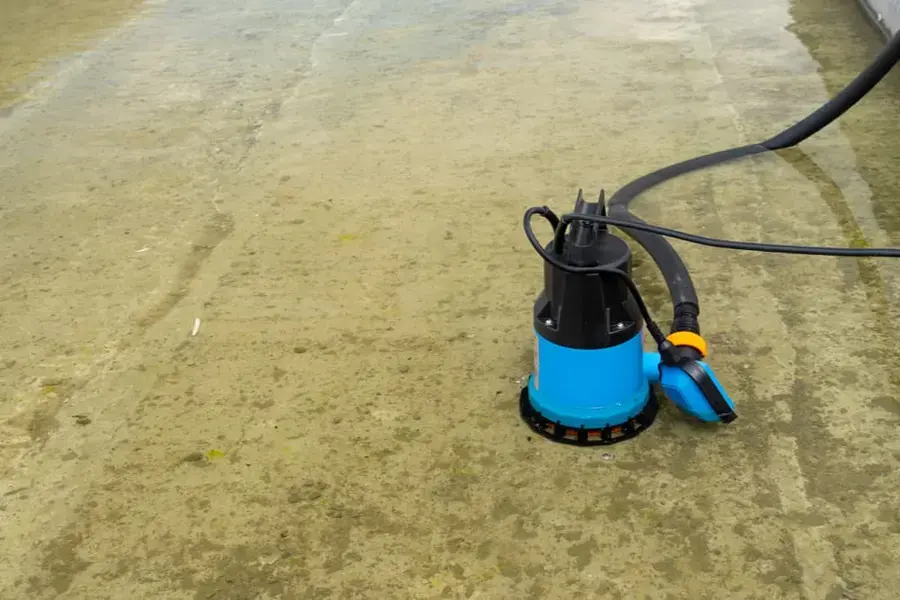
Water extraction is the first job. Pumps and extractors remove standing water from the floor, and the team lifts materials that cannot be saved.
Because main break water carries silt, floors and low walls are cleaned as they are dried. Leaving silt behind can hold moisture against wood and drywall.
Carpet and pad that soaked up street water are normally removed. Hard surfaces and solid wood often survive when they are cleaned and dried promptly.
- Standing water is pumped out first
- Silt and debris are cleaned from floors and trim
- Wet carpet, pad and low drywall are removed
- Salvageable contents are moved to a dry area
Drying the building
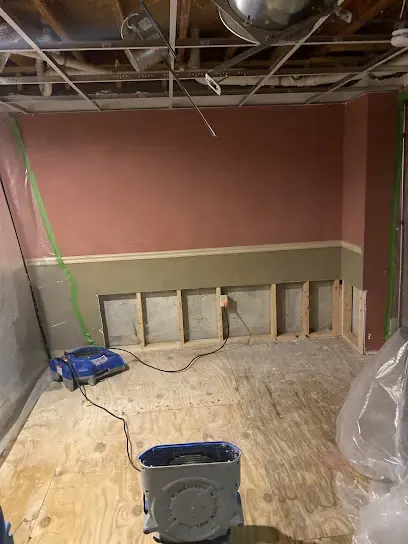
Once the water is out, the structure still holds moisture. Structural drying places air movers and dehumidifiers and tracks readings until walls and floors match a dry reference.
Winter breaks bring a twist. Cold walls dry slowly, so the team often raises air temperature and adds dehumidification to keep the process moving.
Readings are taken at each visit, and equipment is moved as areas finish.
Anyone comparing options for water damage restoration in Newton should ask how the readings are recorded and when the drying will be called finished.
Mistakes that make a main break worse
The hours after street water arrives are confusing, and a few well meant moves add to the loss.
Most of them come from trying to save time or money, and each one has a cheaper alternative.
- Running a household vacuum on standing water, which is an electrical risk and spreads silt
- Leaving wet carpet in place for days, which keeps moisture in the floor
- Painting or covering damp walls before they are dried
- Throwing everything out before photographing it
- Waiting for the street water to subside before thinking about the inside
What a homeowner can safely do
Move small valuables and papers to a dry shelf, open interior doors so air moves, and shut off the main supply inside the house if the City has not already cut the flow.
Anything heavier waits for the restoration team, which has the pumps, the gloves and the moisture meters to do it safely.
Records and the claim
Insurance rules vary, and many policies treat water that comes from outside differently from a burst pipe inside. The policy and the insurer decide.
A clear file makes any claim easier: photographs, a damage list, the date of the break and the cleanup notes. The restoration team's moisture logs add to that record.
The City's own leak program is also part of the picture. Newton runs a semi annual leak detection survey on its water mains, and it documented and repaired 177 leaks in 2022 and 209 leaks in 2023.
- Report the break to the Utilities Division
- Keep the dated photographs together
- Save invoices for pumping, drying and any rented equipment
- Ask the insurer in writing what is covered before large repairs begin
Questions
Is the City or the homeowner responsible when a main breaks?
The City runs the water system and handles the pipe. Damage inside a home is usually the owner's to document, and whether insurance covers it depends on the policy.
Is water from a broken main safe?
Not after it crosses the ground. It picks up soil and debris, so the cleanup treats it with caution.
Can carpet be saved after street water?
Sometimes the surface can be cleaned, but carpet pad is usually removed. The restoration team decides based on how long the material stayed wet.
How long does drying take after a main break?
Often several days. The time depends on how much water entered and how cold the building is.
What if the break happens at night?
Water keeps spreading while people sleep. A restoration team works around the clock, and the first extraction visit is the most valuable one.