Weston works differently from most towns around Boston. The town has no public sewer, which means that when wastewater comes up inside a house, the cause is almost always the home's own septic system.
Key takeaways
- Weston has no public sewer. Homes use private septic systems under Title 5 of the state environmental code.
- The Weston Board of Health regulates septic system design and installation through Chapter VI of its regulations.
- When wastewater backs up inside, stop using water, keep people away, and treat the spill as sewage.
- The tank and field need a septic professional, while the interior damage needs cleanup and drying.
- A septic backup is Category 3 water, so porous materials it touches are usually removed.
What no public sewer means for a Weston home
In most of the region, a backup means a blocked pipe or a surcharged City main. In Weston there is no town sewer at all, so each house treats its own wastewater.
The rules for that treatment come from Title 5 of the state environmental code, and the Weston Board of Health regulates septic system design and installation through Chapter VI of its regulations.
Water comes in from the MWRA, so what goes out through the septic system is the homeowner's to manage.
- No City sewer main to call about
- A tank and a field belong to the property
- The Board of Health is the local authority for system design and installation
Why a septic system backs up into the house
A septic system takes wastewater to a tank, where solids settle, and then to a field where the liquid soaks away. Trouble at either end sends water back toward the fixtures.
Weston homes are mostly large single family houses on big lots. With many fixtures running at once, a system that is already full of solids or soaked at the field has little room to take more.
A tank that is full or blocked
Solids build up over time. When the tank is full or a baffle is blocked, wastewater has nowhere to go but back up the lowest drain.
The first sign is often slow drains and gurgling in more than one fixture.
A field that is saturated
After days of rain or a spring thaw, the ground around the field can hold so much water that the liquid cannot soak away.
That is when a system that worked all summer starts to back up.
First steps when wastewater comes up inside
Quick, calm steps keep the spill small and the household healthy.
The urge is to flush or run water once more to see whether the problem has cleared. Each extra gallon goes to the same place and makes the spill larger.
If the backup is in a basement or lower level, keep the electrical question in mind too. Wastewater near outlets or a panel is a reason to stay out of the room.
- Stop all water use: toilets, sinks, showers, dishwashers and washing machines
- Keep children and pets out of the affected room
- Do not walk through the spill barefoot, and wash well after any contact
- Photograph the backup and the fixtures it came from
- Contact a septic professional for the tank and field
- Leave porous items such as rugs and cardboard where they are until judged
Who handles which part of the problem
The restoration side of the problem is covered under water damage restoration in Weston.
Two jobs follow a septic backup. They are done by different trades, and they work best in order.
The septic professional finds out why the system backed up, and clears or repairs the tank, the piping or the field. Questions about the design or replacement of a system can go to the Board of Health.
The interior cleanup is a separate trade. Sewage backup cleanup deals with the floors, walls and contents that the wastewater touched.
- Septic professional: tank, piping, field and pumping
- Board of Health: regulations for design and installation
- Restoration team: interior cleanup, removal and drying
- Insurer: whether the policy covers the damage
How interior cleanup is done
Septic wastewater carries bacteria, so it is Category 3 water, the same category as any sewage. The goal is to contain it, remove it and leave surfaces clean and dry.
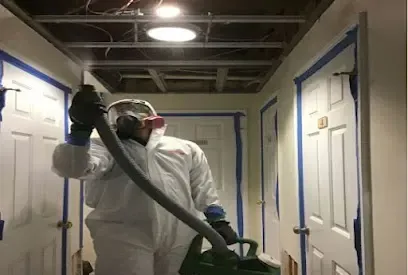
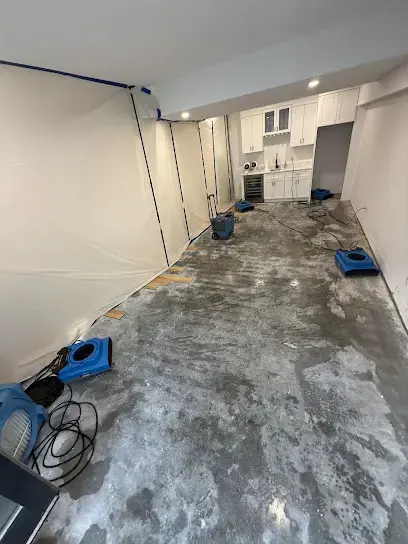
The work begins with a barrier around the affected area and protective gear for the crew. Standing water is removed with water extraction equipment that keeps the spill from spreading.
Carpet, pad, insulation and drywall that soaked up the wastewater are cut out and bagged. Hard surfaces are cleaned and treated.
Large houses add a twist. Wastewater can travel under a bathroom door, across a hallway and into the room below, so the team checks beyond the visible spill with a moisture meter.
Once the wet material is out, structural drying finishes the job, and the readings show when the area is ready for new flooring and paint.
- Containment of the affected area
- Extraction of standing wastewater
- Removal of porous materials that were wet
- Cleaning and treatment of hard surfaces
- Drying with air movers and dehumidifiers
- Readings logged until the area is at a dry reference
Records to keep
A septic backup involves several people, and a clear record keeps the claim and the repairs moving.
Dated photographs, receipts and a short log of who did what are enough for most files.
- Photographs of the backup before cleanup
- The septic professional's invoice and a note of what was found
- The restoration team's moisture readings and removal list
- Any correspondence with the Board of Health or the insurer
Preventing the next backup
Septic systems often fail from neglect as much as from age. Regular pumping and care keep solids from reaching the field.
A few habits help, and they are within any owner's reach. The point is not to pretend a tank will last forever but to catch trouble early.
- Have the tank pumped on the schedule a septic professional recommends
- Spread laundry loads through the week instead of running several in a day
- Keep wipes, grease and paper towels out of the drains
- Keep heavy vehicles and structures off the field
- Fix dripping fixtures so extra water does not reach the tank
Questions
Who does a Weston homeowner call when the septic system backs up?
A septic professional handles the tank and the field. The Board of Health is the place for questions about system design and installation. The interior cleanup is a separate job.
Is there a town sewer to call?
No. Weston has no public sewer, so there is no town main involved. Each home treats its own wastewater.
Is a septic backup dangerous?
It can be, because the water carries bacteria. Keep people and pets away, avoid contact, and let a trained team clean porous materials.
Can carpet be saved after a septic backup?
Usually not. Carpet and pad that soaked up wastewater are normally removed, while hard surfaces can often be cleaned and treated.
Why did the backup start after a stretch of rain?
Heavy rain and snowmelt can saturate the ground around a septic field so liquid cannot soak away. A system that is already close to its limit then sends wastewater back toward the house.
Does insurance pay for a septic backup?
That depends on the policy. Coverage for sewer or septic backup is often a separate add on, so the policy and the insurer decide.