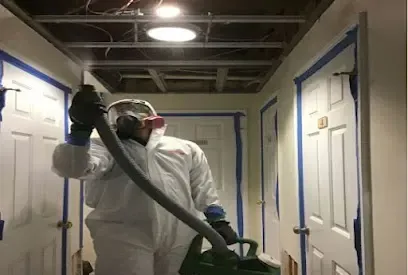
When a floor drain in Watertown starts pushing dirty water into a room, the first question is whether the problem is inside the house or out in the street. The answer changes who fixes the pipe, and it changes the order of the calls.
Key takeaways
- The Watertown DPW asks residents with a sewer backup to call it before a plumber, so the City can check its own main first.
- Property owners in Watertown are responsible for their own service laterals, the pipes that run from the house to the main.
- The City requires backwater valves, at the owner's expense, on building drains from fixtures that can backflow, such as basement floor drains.
- Sewage is contaminated water. Stop using fixtures, keep people and pets away, and leave porous materials for the restoration team to judge.
- Photograph the backup and keep every receipt, because the City, the plumber and the insurer may each ask for a record.
Who owns which piece of the sewer system
Watertown's Department of Public Works, through its Public Utilities Division, runs the City's water and sewer systems.
The sewage is gravity fed. There are no pumping stations in the City, and everything flows on to the MWRA system for treatment at the Deer Island Wastewater Treatment Plant.
A homeowner who finds sewage on the floor is also dealing with a cleanup problem, and that side belongs to water damage restoration in Watertown.
The split of responsibility is simple on paper. The City owns the main in the street, and the property owner owns the service lateral that connects the building to it.
- City side: the sewer main
- Owner side: the service lateral and the drains inside the building
- Shared concern: a blockage can sit in either place, and only a check can tell which
Why the call to the DPW comes first
The DPW asks residents with a sewer backup to call it before calling a plumber. The reason is practical: if the City main is blocked, the plumber's work inside the house will not clear anything, and the owner pays for a visit that could not help.
A call to the DPW also puts a problem on the City's list. If several homes on one street back up at once, that points to the main.
If the main checks out, the problem is on the private side, and a plumber can trace the lateral.
What to tell the DPW
Give the street, the fixtures that backed up and roughly when it began. Mention whether neighbors have the same trouble.
- Which drains are affected, such as a basement floor drain or a first floor toilet
- Whether the water is rising, steady or going down
- Whether it followed heavy rain
What causes a lateral to fail
Watertown notes that older homes may have deteriorated joints in the lateral pipe, and that the roots of large shrubs or trees can break lateral pipes.
About 80 percent of Watertown housing was built before 1979, according to the City's staff draft housing plan, so many laterals have been in the ground a long time.
Roots enter at a joint, grab onto waste, and slowly close the pipe. The backup often arrives on a day of heavy use, such as a weekend of laundry.
Early signs are easy to dismiss. Slow drains in more than one fixture, gurgling from a toilet when the washer drains, or a smell near the floor drain all point toward the same pipe.
- Roots working into an open joint
- A cracked or shifted section of pipe
- Grease and wipes collecting at a rough spot
- A joint that has pulled apart
Backwater valves and floor drains
Watertown requires backwater valves, at the owner's expense, on building drains from fixtures liable to backflow from a DPW sewer. The City gives basement floor drains as an example.
A backwater valve is a flap that lets water leave the house but closes against flow coming the wrong way. When one is installed and working, a surcharged main has a much harder time pushing sewage into the house.
The valve is not a cure for a blocked lateral. It guards against backflow from the main, and it needs to be kept clear and checked.
Cleanup after the pipe is clear
Sewage is Category 3 water. It carries bacteria, and it does not belong in walls, carpet or stored goods.
Standing sewage also needs water extraction with equipment that keeps the water away from clean areas, which is a reason not to mop it around.
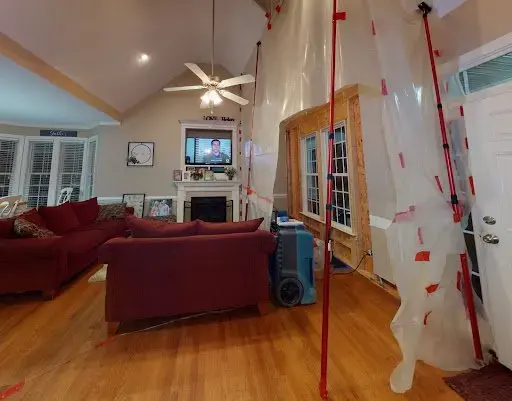
That is why sewage backup cleanup is a containment job first. The affected zone is closed off, standing water is extracted, and porous materials are removed instead of cleaned.
Surfaces that remain are cleaned and treated, and the area is dried with measured readings. If the water spread under flooring or into other rooms, basement flooding cleanup covers the extraction and drying that follow.
- Carpet, pad and low drywall that touched the sewage are removed
- Hard surfaces are cleaned and treated
- Air movers and dehumidifiers are set only after the wet material is out
- Readings are logged until the area reaches a dry reference
What the owner can do while waiting
A few steps limit the damage and protect health until the pipe is cleared and the cleanup begins.
The order matters more than speed. The DPW comes first, then a plumber, then the restoration team, and that order keeps each job from repeating the last.
Stop using the drains that connect to the backed up pipe. Every flush and every load of laundry sends more water to the same place.
If the water is rising fast or reaching electrical outlets, stay out of the room and keep the power question for an electrician.
- Keep children and pets out of the room
- Wear gloves and boots if contact cannot be avoided, and wash well afterward
- Do not run a household vacuum on wet sewage
- Photograph the backup, the fixtures and the water level
- Keep receipts from the plumber, the DPW visit notes and any equipment rented
Questions
Should a Watertown owner call the DPW or a plumber first?
The DPW. It asks residents with a sewer backup to call before a plumber so it can check the City main, and that avoids paying for work inside the house that cannot fix a blocked main.
Who pays to repair the lateral?
Watertown property owners are responsible for their own service laterals. The City side ends at the main, so a damaged lateral is an owner expense.
Does a backwater valve stop every backup?
No. It guards against flow coming back from the main. A blockage inside the lateral or the house drains is a different problem and needs a plumber.
Is it safe to clean up sewage without help?
Small spills on hard surfaces can be handled with care and gloves, but sewage that reached carpet, drywall or a larger area needs protective equipment and proper removal.
Will insurance cover a sewer backup?
That depends on whether the policy has sewer backup coverage, which is often an add on. The insurer decides, and a clear record of the damage helps.