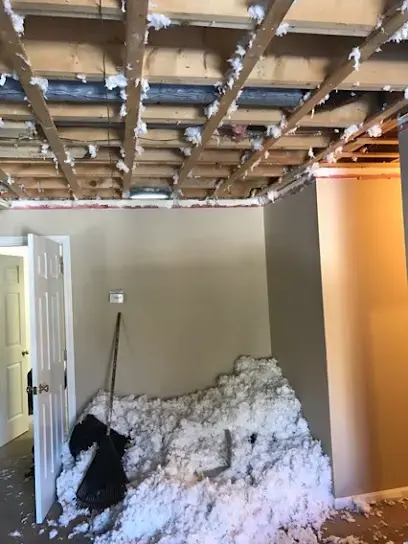
In a Waltham two family or triple decker, a water stain on the ceiling often has nothing to do with the roof. It comes from the apartment above, from a bathroom, a kitchen or a washer, and the people who live there may not know.
Key takeaways
- Waltham's older housing includes many two family houses and triple deckers, so a ceiling leak very often starts in the unit above.
- A stain that grows after someone upstairs uses the shower or the dishwasher points to plumbing. A stain that grows in rain points to the roof.
- Sagging or bulging plaster can fail suddenly, so keep people out from under it.
- The ceiling is only part of the damage. The joist bay above it holds water too, and it needs drying.
- Tenant and owner each need a record, so photograph the stain, the date and what was running upstairs.
Why upstairs leaks are so common in Waltham
The South Side and the streets around Moody Street and Main Street were built out for workers of the Boston Manufacturing Company and Waltham Watch. A large share of that housing predates World War II, and it includes two family houses and triple deckers.
In these buildings, one unit's floor is another unit's ceiling. A bathroom sits over a living room, and a kitchen sits over a bedroom.
A slow leak in the supply or drain pipes for a tub, a toilet, a sink or an appliance has only one way to go, and that is down.
- A tub, shower or toilet above the stain
- A kitchen sink or dishwasher in the unit above
- A washer on an upper floor
- A pipe in a floor cavity that has pinholed or loosened
Roof leak or plumbing leak: how to tell
The cause decides who fixes it and where the water is. A few simple observations help sort the two.
A plumbing leak follows use. The stain grows after a shower or after the dishwasher runs, and it can show up in dry weather.
A roof leak follows rain and usually shows on the top floor.
If the stain tracks the weather, the cause may be roof leak water damage from old flashing or a porch roof, and the owner of the building handles that side.
- Stain grows after fixtures upstairs are used: plumbing
- Stain grows in rain or snowmelt: roof or flashing
- Stain on a middle floor of a triple decker: usually plumbing from above
- Stain on the top floor ceiling: roof or attic, or a bathroom directly above
Safety first when plaster sags
Water adds weight to plaster, and wet plaster can fall without warning. A bulge or a sag is a warning sign, not a cosmetic flaw.
People should stay out from under the sagging area and keep children and pets away until it has been checked.
Small steps while waiting
Place a bucket where water drips, and move furniture and rugs out of the way. Cover items that cannot be moved with plastic.
- Do not stand or work under a sagging area
- Turn off a light fixture that sits in the wet area
- Photograph the stain, the date and the fixtures above
Tell the right people
A tenant tells the owner, and the owner tells the tenant above, so the upstairs plumbing can be shut off. In a two family house that conversation is usually short, but it needs to happen early.
How the leak is traced and dried
Ceiling leak water damage work starts with finding the source. Moisture meters and a thermal camera show the path water took through the plaster and the joist bays.
The restoration team then opens the ceiling only where the readings say it must. Sagging or saturated plaster comes down in a controlled way, and the framing above is exposed to the air.
Wet insulation is removed, and the joist bays are dried with air movers and dehumidifiers until readings match a dry reference.
- Moisture mapping to follow the water above the ceiling
- Controlled removal of failed plaster
- Removal of wet insulation
- Air movers and dehumidifiers for the open bays
- Readings logged at each visit
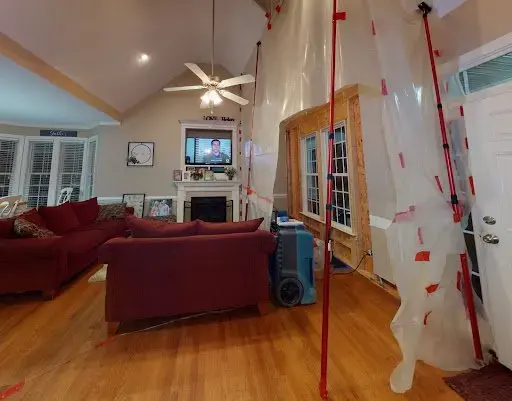
When an appliance is the cause
A washer, a dishwasher or an ice maker can leak for weeks before anyone sees a stain below. The ceiling shows the leak, but the damage is under cabinets and floors as well.
Appliance leak water damage covers drying under cabinets and hardwood and the ceiling below, and the same steps apply whether the leak is old or new.
- A hose that has loosened or cracked
- A drain connection that leaks at the wall
- A pan or a supply valve that has failed
- An overflow after a blocked drain
Habits that catch upstairs leaks early
Most of these leaks start small. A bathroom that is checked every month is far less likely to cause a ceiling stain than one that is never looked at.
In a two family house, the owner and the tenants all share the benefit of a few simple checks.
- Look under sinks and around toilet bases for damp or soft spots
- Check the hoses behind the washer and dishwasher
- Re caulk the tub and shower edges when they crack
- Tell the owner the day a ceiling stain appears, not the week after
- Know where the shutoff for each unit is, and who can reach it
Owner, tenant and records
A leak between units raises a quiet question: whose policy and whose responsibility? The lease and the insurance policies decide, not the restoration team.
A clear file helps both sides. Dated photographs, the time the leak was noticed and a note of what was running upstairs make later conversations simpler.
Structural drying logs, with readings at each visit, show that the building was brought back to a dry reference.
- Photographs of the stain over several days
- The date and time the leak was first noticed
- A note of who was told, and when
- Receipts and invoices for the cleanup
Questions
How can a tenant tell whether a ceiling stain is from the unit above?
If the stain grows after the shower, the dishwasher or the washer is used upstairs, it is plumbing. If it grows in rain, it is more likely the roof.
Is a sagging ceiling dangerous?
It can be. Water adds weight to plaster, and a bulging area can fall. Keep people out from under it until it is checked.
Does the whole ceiling need to come down?
Not usually. The team opens the area the readings show is wet, plus a margin, instead of removing the whole ceiling.
Who pays for the damage when the leak is from another unit?
That depends on the lease, the owner and the insurance policies. The restoration team documents the damage so those parties can sort it out.
How long does it take to dry a ceiling and the bay above it?
Often several days. The time depends on how long the leak ran and how much insulation and framing got wet.