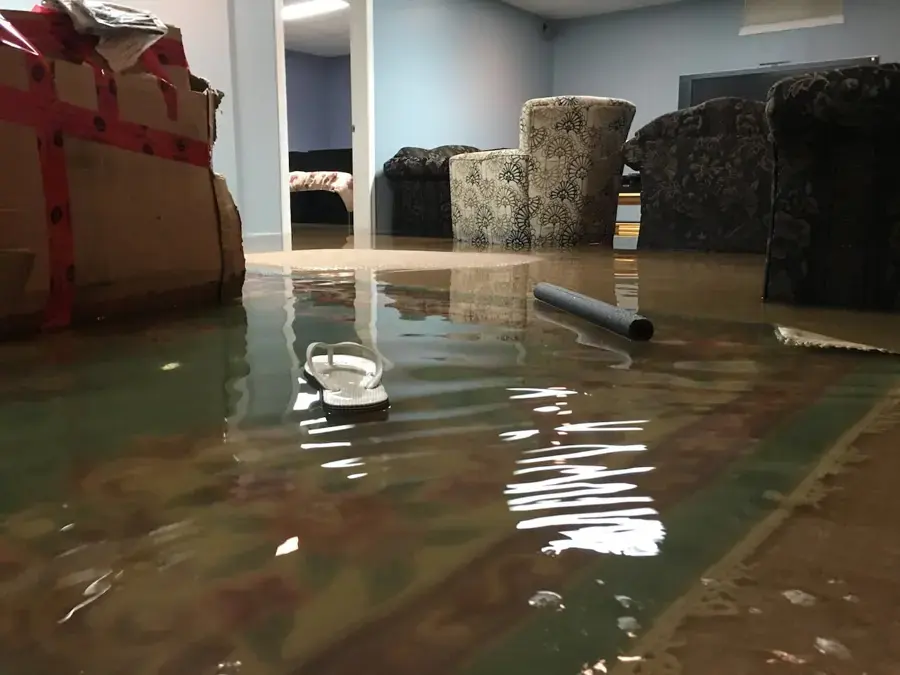
A Waltham basement can take on water without a single pipe breaking, because the foundation walls themselves are old and porous. Many of the city's older houses sit over stone and block that let groundwater through whenever the ground stays saturated.
Key takeaways
- Old stone and block foundation walls let groundwater seep in during long rains and snowmelt, even when no pipe has failed.
- A flooded basement is three jobs at once: remove the standing water, remove what cannot be saved, and dry the structure that is left.
- Stay out of standing water where outlets, a furnace or a water heater sit below the water level, and leave the electrical panel alone if it cannot be reached from a dry spot.
- Photograph the water level, the floor and the stored items before anything is moved, because the insurer will ask for that record.
- Drying is finished when moisture readings reach a dry reference, not when the surface looks dry.
Why older Waltham foundations seep
Waltham grew up as a mill city on the Charles River. The South Side and the streets around Moody Street and Main Street were built out for workers of the Boston Manufacturing Company and Waltham Watch.
A large share of that housing predates World War II. Two family houses, triple deckers and colonials often stand over old stone and block basements, and those walls were never built to be watertight.
Mortar joints loosen with age. In a long rain or a spring snowmelt, groundwater presses against the wall and finds the joints, the cracks and the point where the wall meets the floor.
The city sits among the Charles River, Hardy Pond, Beaver Brook and Stony Brook, so the ground holds water for days after a storm moves on.
- Dark, damp patches that spread along the base of a wall
- Water beading at the joint between wall and floor
- White mineral crust on stone or block
- A damp, heavy smell in the basement after a wet week
What March 2010 showed about wet spells
The March 2010 storms flooded the Charles River watershed and basements across Middlesex County, the county Waltham sits in.
That event is a useful reminder of how slowly this kind of flooding builds. Water arrives over days of rain, the ground fills, and then a basement that stayed dry for years takes in water at once.
For a house on one of those older streets, the lesson is to watch the weather over several days, not just the last storm. A basement that is dry in September can be wet by the end of a rainy October.
When the source is a river or a flooded street rather than seepage, the work is closer to storm and river flood cleanup, because that water is treated as contaminated.
The first steps when water is standing
The first hours decide how much of the basement can be saved. These steps keep people safe and keep the record clean.
Stay safe around electricity and fuel
Water over an outlet, a furnace or a water heater control is a shock and fire risk. Nobody should wade in until the power to that area is off.
If the panel sits in the wet area, the electric utility or an electrician should make that call.
- Do not touch appliances that stand in water
- Keep children and pets out of the basement
- Open a window upstairs for air only if the weather allows
Record the loss
Photographs and video of the water level, the walls and the floor are the start of an insurance file.
Make a list of what was stored below, with rough age and value, before anything is carried out.
Stop adding water
Washers, dishwashers and long showers all send water to the same drain system. Pause them until the basement is dry and the drain is confirmed clear.
Items on the floor should go up onto shelves or upstairs, starting with papers, photographs and electronics.
How the restoration team removes the water
Standing water goes first. Truck mounted pumps and portable extractors pull it out before it wicks into plaster, wood trim and the bottom of the stair stringers.
This is the heart of water extraction, and speed matters.
Water that comes in from outside has crossed soil and may have mixed with drain water, so it is handled with caution until the source is known.
Once the floor is clear, the team sorts what stays and what goes. Anything porous that sat in the water, such as carpet pad and low drywall, is judged by how long it stayed wet and what the water carried.
Hard items like shelving, tools and solid wood furniture can often be cleaned and dried. Paper goods and fabric usually cannot.
- Wet carpet and pad are lifted and removed
- Drywall and paneling are cut back above the wet mark
- Insulation that has soaked up water is bagged out
- Cardboard boxes and soaked upholstery are discarded, while hard goods are cleaned and dried
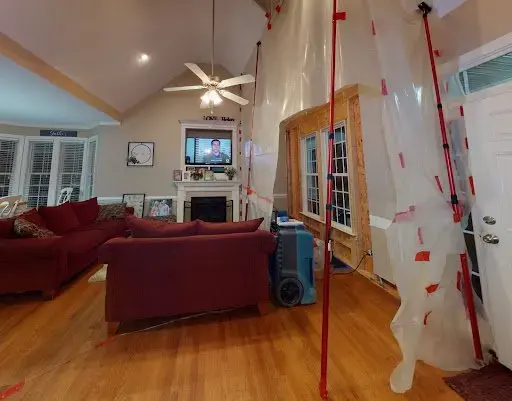
Drying stone, block and framing
Stone and block hold water longer than they look. A wall can feel dry on the surface while its core is still wet.
That is why structural drying relies on meters, not touch. Air movers and dehumidifiers run while the team checks readings and moves equipment between visits.
The goal is a reading within a few points of a dry reference material taken from the same house.
In an older house, that reference might be an interior wall on an upper floor that never got wet. It shows what dry looks like for that building's own wood and plaster.
- Moisture readings on the walls, the floor and the framing above
- Humidity in the room, so air movers and dehumidifiers can be balanced
- Written notes of each visit for the insurance file
Keeping the next storm out
Restoration dries the basement. It does not seal a foundation, and a wet wall will be wet again in the next long rain until the cause is addressed.
A failed pump is a common cause when the pit overflows, and sump pump failure cleanup covers that case.
A few habits help between storms, and most of them cost little.
- Point downspouts away from the foundation wall
- Keep gutters clear of leaves before the autumn rains
- Test a sump pump by pouring water into the pit
- Ask a foundation contractor about sealing if the same wall seeps every season
Questions
Is water seeping through a basement wall the same as a flood?
Not always. Seepage is groundwater working through porous walls, while a flood usually means surface water or a river entering from outside. Insurers often treat the two differently, so the cause should be described accurately.
Can a damp stone basement dry on its own?
Surface moisture can fade, but water held deep in stone and block usually stays. Without meter readings, a basement can look dry and still hold moisture that damages wood and finishes.
How long does a flooded basement take to dry?
Often several days, depending on how much water entered and how heavy the walls are. Drying is finished when readings match a dry reference, not on a set day.
Does homeowners insurance cover a flooded basement?
Policies differ on groundwater seepage, sewer backup and flood. The policy and the insurer decide, and photographs taken early make the claim easier to support.
How can a homeowner tell seepage from a sewer backup?
Seepage is usually clear and shows at walls and floor joints. Dark, foul water rising from a floor drain points to a sewer problem, which has its own steps under sewage backup cleanup.