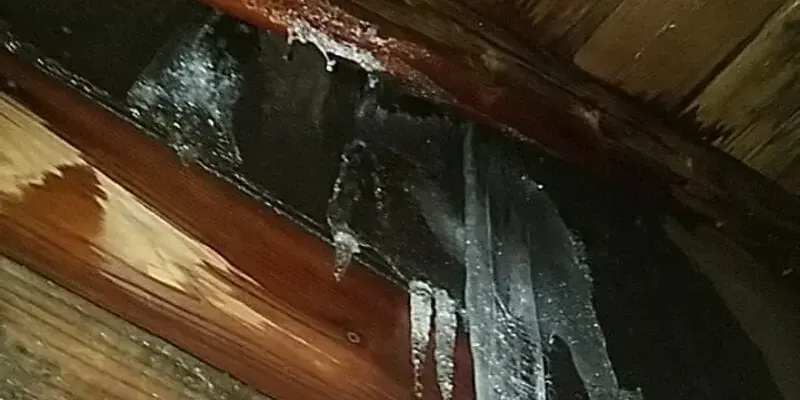
A frozen pipe is quiet until it thaws. The ice itself rarely floods a house, but the crack it leaves does, and the water can run for hours behind a wall before anyone sees a stain.
Key takeaways
- The Town of Lexington's frozen pipe guidance says pipes freeze most often when exposed to severe cold.
- The Town names outdoor hose bibs, pool and sprinkler pipes, and supply pipes in unheated basements, crawl spaces, attics, garages and kitchen cabinets.
- Pipes that run against exterior walls with little or no insulation can also freeze, and hot water pipes freeze as easily as cold ones.
- The real damage often comes at the thaw, when a crack that ice held shut starts to leak.
- If a pipe splits, shut off the water at the main, then call a plumber for the pipe and a restoration team for the water.
The places Lexington names for frozen pipes
Lexington's Department of Public Works Water and Sewer Division runs the Town's water and sewer systems, and the Town has put out its own advice on frozen pipes.
Houses from Lexington Centre to East Lexington and North Lexington all face the same winters, and the same weak spots appear in each. The restoration side is covered under water damage restoration in Lexington.
That guidance reads like a map of the weak spots in a house. Pipes freeze most often where severe cold reaches them, and some places are more exposed than others.
A common belief is that only cold water freezes. The Town's guidance says hot water pipes can freeze as easily as cold ones.
The pipe does not care what it carries. When the temperature around it drops far enough and the pipe is still, water inside turns to ice.
A faucet that runs a trickle in a deep freeze keeps water moving and can prevent a freeze in a pipe that is at risk.
- Outdoor hose bibs
- Pool and sprinkler pipes
- Supply pipes in unheated basements
- Pipes in crawl spaces, attics and garages
- Supply pipes inside kitchen cabinets
- Pipes that run against exterior walls with little or no insulation
What happens when a frozen pipe splits
Ice expands, and a rigid pipe has little room to give. The pressure builds between the ice plug and the closed faucet, and the pipe splits at its weakest point.
Often the split is not where the ice sits. It forms in the stretch of pipe between the plug and the fixture.
The leak starts at the thaw
While the ice stays solid, it plugs the crack. When the weather warms or a heater comes on, the ice melts and the crack begins to leak under full pressure.
That is why many frozen pipe floods start on a mild afternoon, not on the coldest night.
Where the water goes
A split in a cabinet fills the vanity and the floor below. A split in an attic drips through the ceiling.
A split in an exterior wall runs down inside the wall cavity, behind plaster or drywall.
In each case the visible damage is a fraction of the wet area.
What to do when a pipe splits
Speed matters, and so does order.
- Shut off the water at the main so the leak stops
- Open the faucets to drain the pipes
- Turn off the power to a wet area if it can be done safely
- Photograph the split pipe and the wet surfaces
- Move belongings and rugs away from the water
- Call a plumber for the pipe and a restoration team for the water
How the damage is dried
Frozen pipe water damage work starts by tracing the leak and removing standing water. Moisture meters and a thermal camera show where the water went, including inside walls.
The restoration team opens walls and ceilings only where the readings say it is needed, so more of the house stays intact.
A cold house adds a challenge. Pipes that froze often sit in the coolest part of the building, and cold materials dry slowly, so the team raises the temperature in the work area to help.
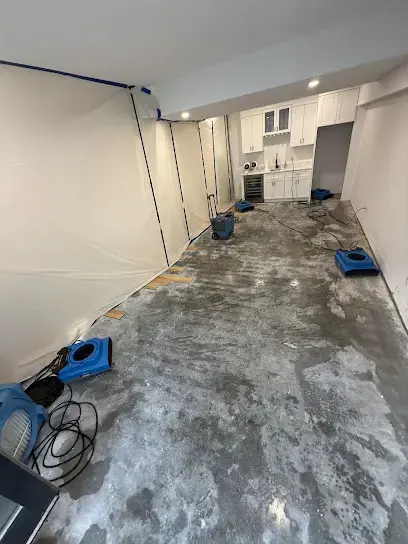
When the leak was bigger than a single cabinet, water extraction comes first, followed by drying with air movers and dehumidifiers.
- Water is extracted from floors and carpet
- Wet insulation and low drywall are removed where needed
- Cavities are dried with air movers and dehumidifiers
- Readings are logged until the area reaches a dry reference
When the pipe has burst, not just frozen
A frozen pipe and a burst pipe overlap. A pipe that has split under ice pressure is a burst pipe, and burst pipe water damage follows the same cleanup and drying steps.
The difference is the speed. A burst pipe on a pressurized pipe floods fast, so the shutoff matters more than anything else.
Signs of a hidden leak after a freeze
A split pipe behind a wall may never drip into a room. The signs are quieter, and they often show up days after a thaw.
Catching them early shortens the dry out and limits what has to be opened.
- A water meter that keeps moving when every fixture is off
- Paint that bubbles or peels on an exterior wall
- A ceiling stain that grows after the weather warms
- A sound of running water in a wall
- A damp, heavy smell in a cabinet or closet
Steps before the next cold snap
Prevention costs little compared with a flooded kitchen. The list below follows the places the Town names.
None of it needs special tools, and most of it can be done in an afternoon before the first hard freeze.
- Disconnect hoses from outdoor hose bibs
- Insulate pipes in unheated spaces
- Open cabinet doors under sinks on exterior walls during a deep freeze
- Let a faucet drip in a cold spell if a pipe is at risk
- Keep the heat on when away, set above freezing
- Know where the main shutoff is and how to turn it
Questions
Which pipes in a Lexington house freeze first?
The Town's guidance names outdoor hose bibs, pool and sprinkler pipes, and supply pipes in unheated basements, crawl spaces, attics, garages and kitchen cabinets, plus pipes against poorly insulated exterior walls.
Can hot water pipes freeze?
Yes. The Town says hot water pipes can freeze as easily as cold ones.
How can a homeowner tell a pipe is frozen?
A faucet that gives a trickle or no water in cold weather is the usual sign. Frost on an exposed pipe is another.
Should a frozen pipe be thawed by hand?
Slow, gentle warmth is the safer route, and open flames are not. If the pipe is already cracked, thawing starts the leak, so be ready at the main shutoff.
Will insurance cover frozen pipe damage?
Many policies cover sudden pipe damage, but terms and conditions about heat and vacancy vary. The insurer decides, and photographs taken early help.