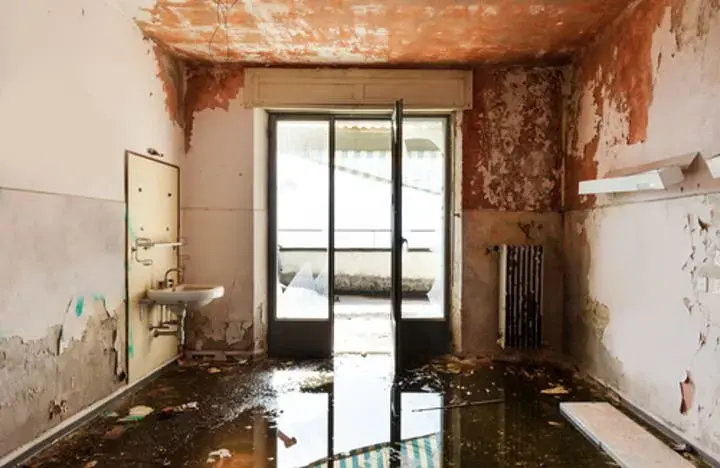
Clay Pit Pond sits between Concord Avenue and Belmont High School, and it does a job most ponds never have: it is a working part of Belmont's drainage. When a storm overfills it, the water goes to the street, and from the street it can go into buildings.
Key takeaways
- Clay Pit Pond overflowed onto the road after two days of rain in March 2010 and closed Belmont High School.
- A late autumn nor'easter on December 9, 2014 made the pond breach its banks in two places and caused street ponding on Concord Avenue and Common Street.
- Belmont police reported flooding and sewage backups in places around town during the December 2014 storm.
- Floodwater that has crossed streets and yards is treated as contaminated, so wet porous materials are usually removed, not just dried.
- Photograph everything before cleanup and keep dated records, because insurers handle flood and sewer backup under different rules.
Why Clay Pit Pond matters in a storm
Clay Pit Pond is a man made pond. It was dug for brick clay between 1888 and 1926, on land that had been a large dump and quarry off Concord Avenue.
In 1933 the Town diverted Wellington Brook through a culvert to flood the old clay pit with 80 million gallons of water, and the pond became an essential part of Belmont's drainage system.
It drains by culvert under Concord Avenue into Wellington Brook. From there the water runs on through Blair Pond, Little River, Alewife Brook and the Mystic River to Boston Harbor.
- A long soaking rain fills the pond over days
- A heavy single storm adds water faster than the culvert can pass it
- When the pond is full, the water has nowhere to go but out
Two storms that show the pattern
In March 2010, Clay Pit Pond overflowed onto the road after two days of rain. The overflow closed the adjacent Belmont High School.
On December 9, 2014, a late autumn nor'easter made the pond breach its banks in two places and caused street ponding on Concord Avenue and Common Street.
A weather station in Cushing Square recorded 3.1 inches of rain since midnight that day, and Belmont police reported flooding and sewage backups in places around town.
What the two storms have in common
Both followed a stretch of rain, not a single burst. The ground was already full, so the pond had little room.
Both put water on public streets first. Properties near those streets had to deal with water arriving from outside rather than from a pipe.
Other flood risks the Town names
Belmont lies in the Mystic River watershed, an area that drains parts of 21 cities and towns, and its runoff flows through culverts holding Winn's Brook and Wellington Brook.
The undersized Beaver Brook culvert under Trapelo Road is described as one of the top flooding weak spots in Belmont.
Anyone with a property near Concord Avenue, Common Street or Trapelo Road should know where the water tends to go and have a plan before the next storm.
What to do when floodwater reaches a property
The order below keeps people safe and keeps the damage from growing.
- Keep out of water that covers outlets, a furnace or a water heater control
- Do not walk or drive through flooded streets
- Turn off the power only if the panel can be reached from a dry spot
- Photograph the water level, the entry point and damaged items
- Move small valuables up and leave heavy removal for the team
If sewage is part of the water
In December 2014 the same storm that overfilled the pond also brought sewage backups. Floodwater and sewer water can mix, and that raises the level of caution.
When the water smells of sewage or rises from a floor drain, the job is a contaminated water job from the first minute.
How floodwater cleanup is done
Storm and river flood cleanup starts from the idea that floodwater is contaminated. It crosses streets, yards and sewers before it reaches a building.
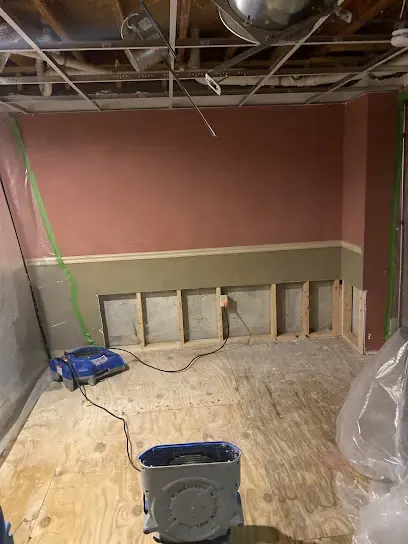
The team uses water extraction to remove standing water, then removes materials that soaked it up and cannot be safely cleaned.
What remains is cleaned, treated and dried, with moisture readings logged until the building reaches a dry reference.
- Standing water is extracted and the floor is cleaned
- Carpet, pad, insulation and low drywall that sat in floodwater are removed
- Hard surfaces and solid wood are cleaned and treated
- Air movers and dehumidifiers dry the structure
- Readings are taken at each visit and written down
Getting ready before the next storm
Storms like these give some warning. A forecast of long rain on top of saturated ground is the signal to act, not the first flooded street.
Owners who have been flooded before tend to prepare in the same few ways, and each takes little effort. For a wider look at what the restoration team does for a Belmont property, see water damage restoration in Belmont.
- Move stored boxes and electronics off low floors and onto shelves
- Clear leaves from catch basins and gutters near the property
- Check that a sump pump runs and that the discharge pipe is open
- Keep photographs of the property in normal condition for comparison
- Know where the main shutoff and the electrical panel are
After the water recedes
The temptation is to start repairs when the street is dry again. Wet walls and floors are still wet, though, and sealing them in with paint or new flooring traps moisture.
Drying comes first and repairs second, with the readings to show the switch is safe.
Records, claims and next steps
Flood and sewer backup are often treated separately under a policy, and some policies exclude one or both. Reading the policy early avoids surprises.
FEMA flood maps are one piece of information, but they do not decide whether a storm can reach a property. A property can be damaged by a storm outside a mapped zone.
Dated photographs, a damage list and the restoration team's moisture logs are the strongest set of records an owner can hand an insurer.
- Photographs taken before cleanup
- A list of damaged items with age and value
- Invoices for pumping, drying and any rented equipment
- Notes of calls with the Town or the insurer, with dates
Questions
Why does Clay Pit Pond overflow?
It is part of Belmont's drainage system and takes runoff from the surrounding area. When days of rain or a heavy storm fill it faster than the culvert under Concord Avenue can pass water, it overflows.
Is floodwater from a pond or street treated as contaminated?
Yes. It crosses streets, yards and sometimes sewers, so porous materials that soaked it up are usually removed.
Does a flood map decide whether a property can flood?
No. A map shows regulatory zones, but water can reach a property outside one. Flood cleanup follows the water, not the map.
How long does flood cleanup and drying take?
Often several days, depending on depth, the materials involved and the weather. Drying is finished when readings match a dry reference.
What if sewage backed up with the floodwater?
The area is treated as a sewage job. See sewage backup cleanup for the steps and the removal of affected materials.