Structural Drying and Dehumidification in Belmont, MA
A floor that feels dry can still be wet inside. The drying team matches air movers and dehumidifiers to the class of loss, reads plaster, framing and floors with meters and runs the equipment until the numbers reach a dry reference.
(888) 629-3140Get Belmont structural drying started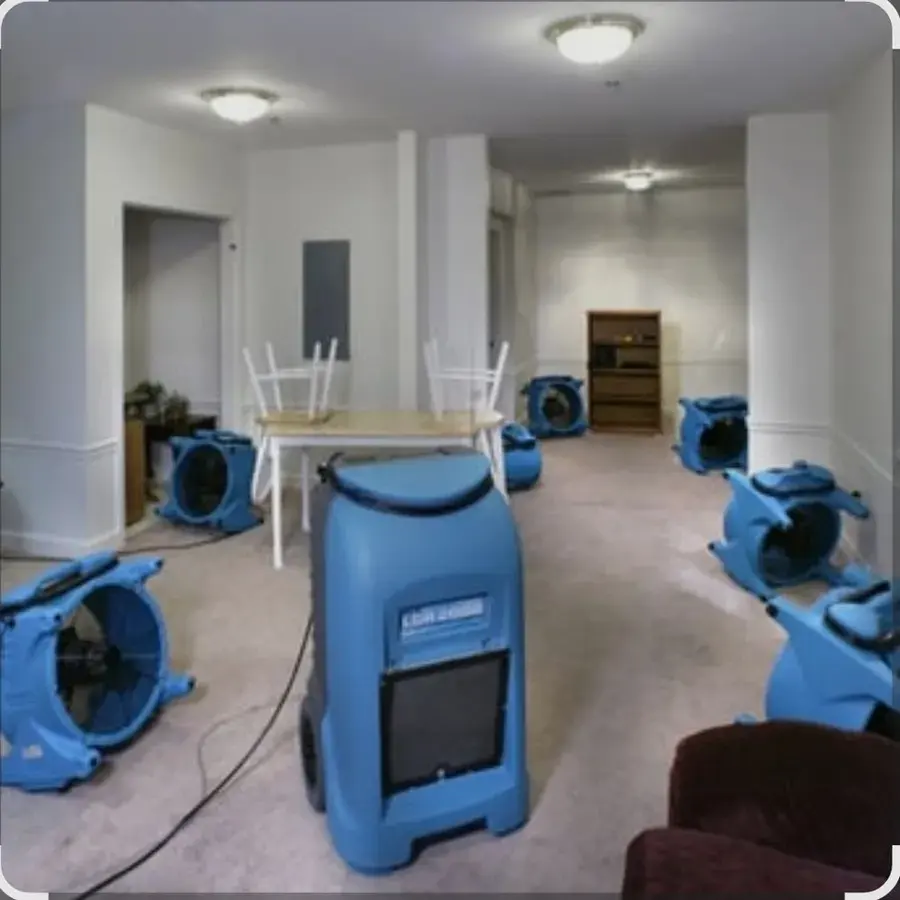
Water that has soaked into a house keeps moving after the puddle is gone. It sits in subfloor, plaster, framing and insulation, and a room that feels dry can still hold enough moisture to warp floors and feed mold. Structural drying removes that hidden water on purpose, with equipment and measurement.
First steps for structural drying and dehumidification in Belmont
- I
Extract first
Standing water slows drying, so it should be removed before any equipment goes in.
- II
Leave the heat on
Warm air dries better than cold air, so keep the thermostat steady.
- III
Keep wet rooms closed
A closed room dries faster and keeps moisture from drifting elsewhere.
- IV
Ask for readings
Have the drying team map moisture before and after equipment is placed.
How structural drying and dehumidification is handled in Belmont
The tech who does the walkthrough maps moisture before any equipment goes down, so the drying plan follows what is actually wet. Equipment stays until the readings say dry, not until it looks dry.
- 1
Map the moisture
Meters and a thermal camera mark every wet area and set the class of the loss.
- 2
Place equipment
Air movers and dehumidifiers go in, sized to each room and material.
- 3
Read and adjust
Daily readings direct moving equipment and adding units where drying lags.
- 4
Release the equipment
Once the wet materials match the dry reference, the equipment comes out.
What does structural drying and dehumidification cost in Belmont, MA?
Structural drying in Belmont, MA usually costs $1,000 to $20,000. Loss class, the count of wet rooms and floors, plaster, hardwood or masonry in the path and the equipment days needed move the figure.
Light loss in one area
$1,000 to $3,000Class 3, several rooms
$3,000 to $8,000Dense materials soaked
$8,000 to $20,000Ranges are typical, not a quote: category of water, square footage, material class and how fast drying started move the number most. Run the water damage cost calculator for a closer range.
What the equipment does
Air movers push dry air across wet surfaces, and LGR dehumidifiers pull moisture out of the air so it can absorb more. The crew sets both from the class of loss, because wet carpet calls for less equipment than hardwood over a subfloor, and plaster takes more time than either.
- Class 1 and 2 losses need fewer units and less time.
- Class 3 and 4 losses involve dense materials and need more.
- Mats pull water out of hardwood through the boards.
Measuring when it is finished
A moisture reading on a wet material is compared with the same material in an unaffected room. Once the wet material reads no more than 2 to 4 points above that dry reference, it counts as dry. Readings and room conditions are logged each day, so the file shows how the drying progressed.
Drying through a Massachusetts winter
In cold months, heated indoor air helps drying, while a cold, damp house slows it. The crew keeps the heat steady and watches indoor humidity. See water extraction for the stage before drying and commercial water damage for larger buildings.
Structural drying and dehumidification across Belmont and nearby towns
The Belmont drying crew covers ZIP 02478, from Belmont Center and Waverley Square to Cushing Square, Belmont Hill, Payson Park and Walnut Hill.
The same service nearby: structural drying and dehumidification in Waltham, Watertown, Lexington.
Structural Drying and Dehumidification questions in Belmont, MA
What does dry mean in a water loss?
A material counts as dry when its moisture reading is within 2 to 4 points of the same material in an unaffected area.
Why use a dehumidifier along with fans?
Fans move air across wet surfaces, but the water has to go somewhere. A dehumidifier removes it from the air so drying keeps going.
Can I dry the house with my own fans?
Household fans help with a small spill on a hard floor. Water inside plaster, subfloor or framing needs meters, controlled humidity and equipment sized to the room.
Will the equipment raise my electric bill?
It uses power, and the amount depends on the number of units and the days they run. The crew can estimate the load before setting up.
How long does structural drying take?
Three to five days for most losses, longer for plaster, hardwood and masonry. Readings, not the calendar, decide.
Why does the crew come back every day?
To read the meters, move equipment and log the room conditions. Daily readings show whether the drying is on track.
Related water damage services in Belmont
Wet plaster, hardwood or framing?
Moisture left inside plaster or subfloor causes trouble later. The crew keeps equipment running until the meters agree, then records the numbers for the claim.
(888) 629-3140Belmont structural drying